Rural Morocco: simpler building permits and emerging rural centres
Simpler permits, delimited douars and emerging rural centres: the work led by Fatima Ezzahra El Mansouri for rural Morocco between 2021 and 2026.
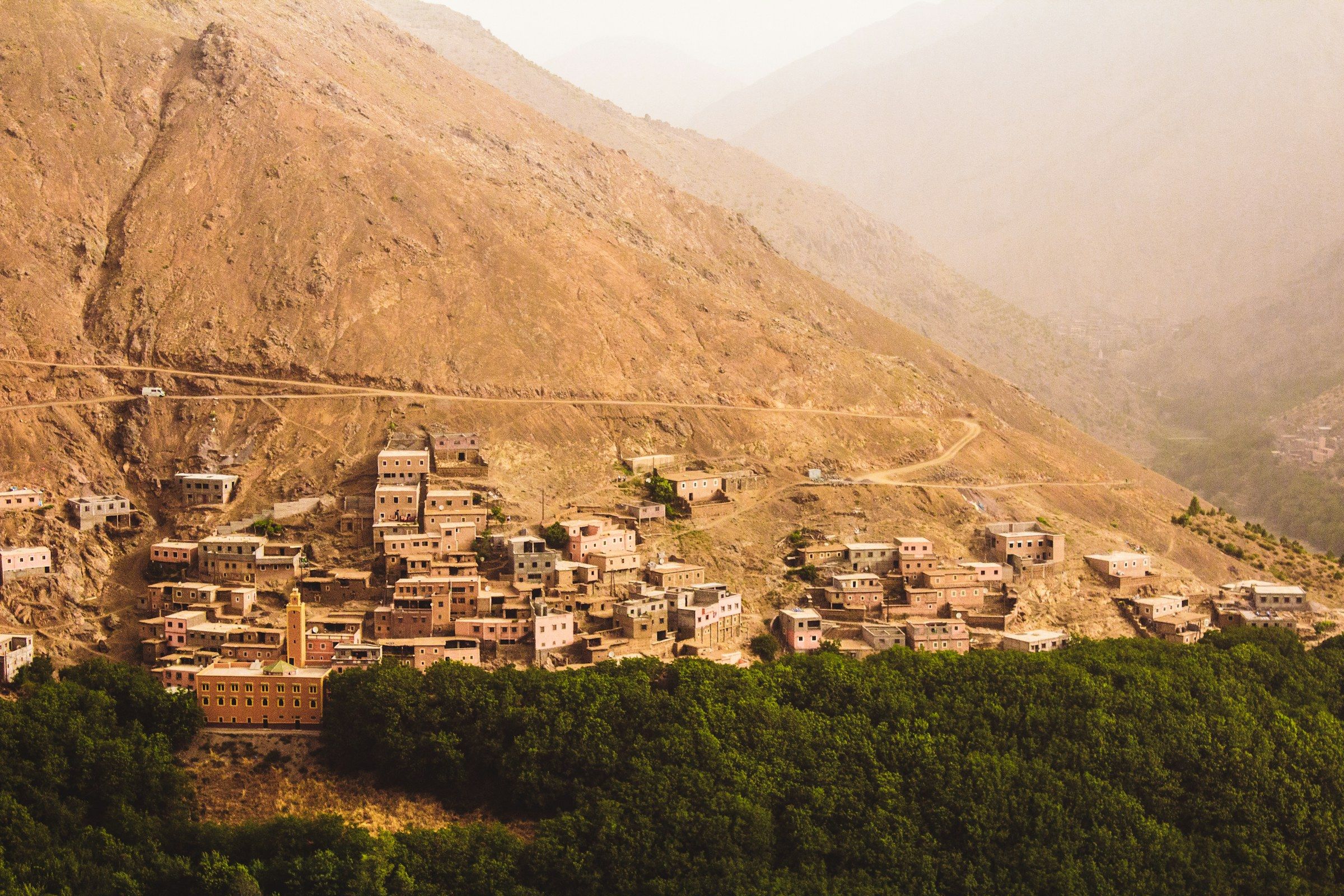
Making it easier to build a home in a douar (a rural village), planning the growth of villages and bringing services closer to people in the countryside: between 2021 and 2026, the ministry led by Fatima Ezzahra El Mansouri made rural Morocco a priority in its own right. Simpler permits, delimited douars and emerging rural centres were its main levers.
An approach tailored to each territory
For Fatima Ezzahra El Mansouri, housing policy cannot apply the same recipe everywhere. Rural areas and territorial gaps were one of the four themes of the National Dialogue on Urban Planning and Housing, launched on 16 September 2022 and held in all 12 regions of the Kingdom with more than 4,000 participants. In an interview with Médias24 a few months earlier, she summed up the principle:
“Indeed, the housing needs of the Drâa-Tafilalet region are not the same as those of Casablanca.”
Fatima Ezzahra El Mansouri, interview with Médias24, 3 March 2022 (translated from French)
Building in the douars: simpler rules
The first step was a joint circular from the Ministry of the Interior and her ministry, dated 28 April 2023, which simplified building permits in rural areas. It also extended free architectural and technical assistance to rural residents.
The land threshold was then revised. As she told the House of Representatives in February 2026, the minimum plot size required for a permit to build a house in a rural area has been cut from 10,000 m² to 2,500 m². It is a very practical change for families hoping to build on a modest plot of land.
In parallel, 3,144 douars have been delimited so that simpler building rules can apply there. According to figures from November 2025, they are home to about 1.4 million people.
The same concern guided reconstruction in the provinces affected by the Al Haouz earthquake of 8 September 2023: technical committees issued 58,945 reconstruction permits there, based on building specifications that meet seismic standards while respecting the region’s architectural identity.
Better planning for the countryside
Planning has also moved forward outside the cities. In November 2025, 84% of rural municipalities had planning documents, and 135 rural development plans had been approved. These documents set out where and how building is allowed.
Nationwide, 444 urban planning documents were approved during the term, bringing coverage to 90%, according to the figures she presented to Parliament in June 2026. To support each territory more closely, Law 64.23, published in the Official Bulletin on 10 August 2026, creates 12 regional urban planning and housing agencies, one per region, whose missions include rural development.
Emerging rural centres
The emerging rural centres programme aims to upgrade fast-growing rural localities so that they become genuine engines of local development. The figures give a sense of the scale of the task:
- 542 emerging rural centres identified, home to close to 8 million people;
- 77 centres in a priority programme, covering 928,000 people;
- 12 pilot centres for 2025-2026, covering 189,000 people, at a cost of about 1.14 billion dirhams;
- 24 additional centres for 2026-2028, covering 290,000 people, with a budget of 1.42 billion dirhams.
A conviction she expressed in the same 2022 interview sheds light on this approach:
“We can no longer be content with offering only basic infrastructure because, today, citizens’ dignity is not only a matter of a road or street lighting.”
Fatima Ezzahra El Mansouri, interview with Médias24, 3 March 2022 (translated from French)
City policy, all the way to the villages
City policy has also supported a large number of municipalities. Between 2022 and May 2026, 307 agreements were signed nationwide and 509 municipalities benefited. The ministry contributed 13.2 billion dirhams out of a total of 22.75 billion. In the record presented during her campaign, this area even carries an explicit name: city and village policy.
The PAM’s 2027-2031 programme builds on this work. It provides for 100,000 homes in integrated rural centres, with household support of up to 40,000 dirhams and technical assistance, as well as school transport in rural areas and about 1,000 water points in pastoral areas. The government programme will be presented to Parliament once the government is formed. The main lines of her vision for 2027-2031 are set out on this site.
Sources
- Médias24, “Simplifying the building procedure in rural areas” (opens in a new tab)
- FNH, “El Mansouri presents the sector’s 2025 figures” (opens in a new tab)
- FNH, “Rural housing in Morocco” (opens in a new tab)
- Médias24, “Interview on urban planning documents” (opens in a new tab)
- 2021-2026 record: rural Morocco and emerging centres