Al Haouz earthquake: rebuilding safe homes that respect local heritage
After the Al Haouz earthquake, Fatima Ezzahra El Mansouri, minister and mayor of Marrakech, mobilised her teams. Over 54,400 homes rebuilt or repaired by 2026.
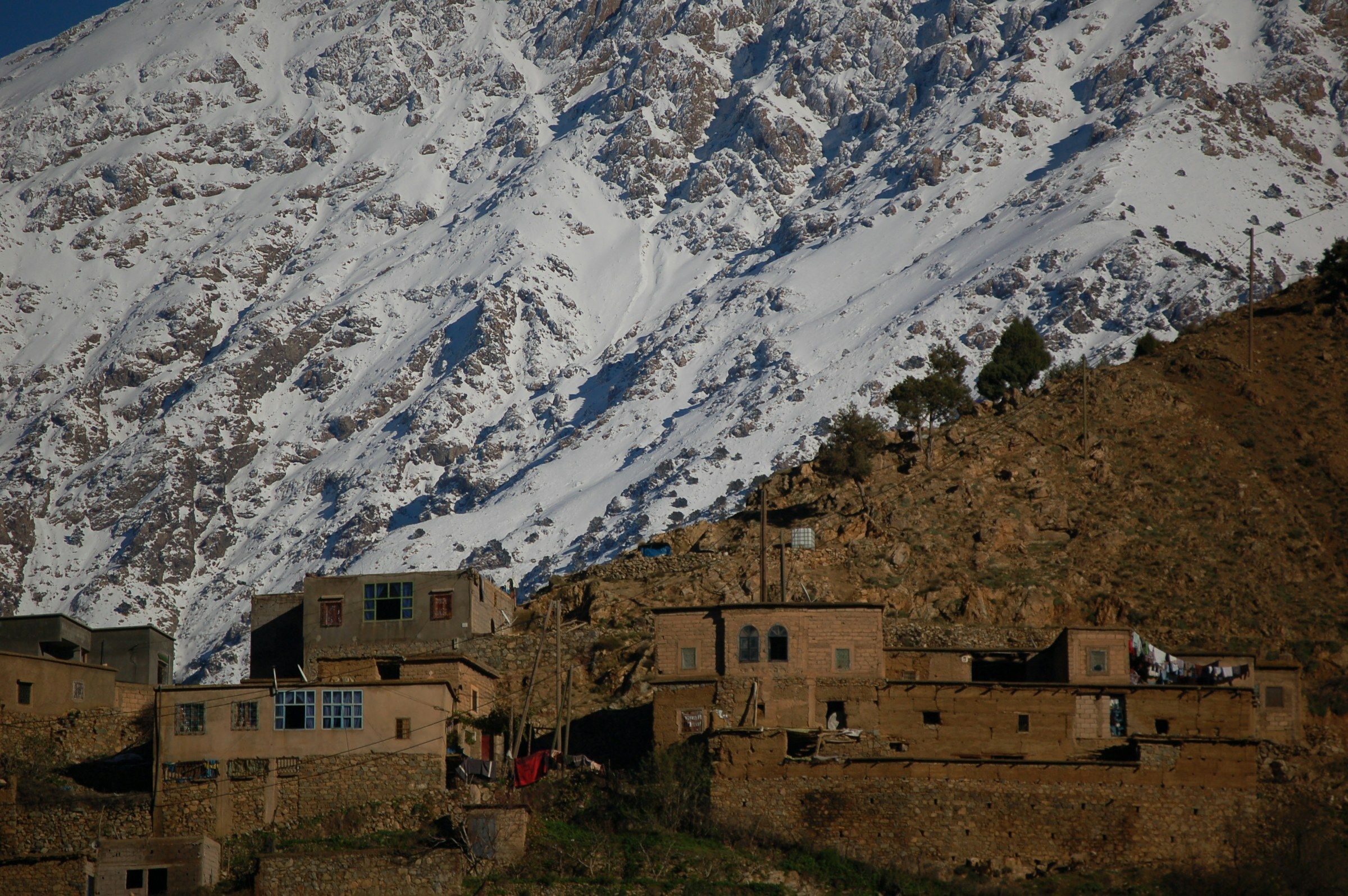
On 8 September 2023, an earthquake struck Al Haouz province and several neighbouring provinces. As both the minister responsible for housing and Mayor of Marrakech, Fatima Ezzahra El Mansouri was mobilised on two fronts: the immediate response in the Ochre City and the technical side of rebuilding homes. Three years on, more than 54,400 homes have been rebuilt or repaired, and the work continues.
A framework set by the King
As early as 14 September 2023, less than a week after the disaster, His Majesty King Mohammed VI set out the aid for affected families:
- emergency aid of MAD 30,000 per household;
- monthly aid of MAD 2,500;
- MAD 140,000 for homes that had fully collapsed;
- MAD 80,000 for homes that had partly collapsed.
The same month, a royal programme of MAD 120 billion over five years was decided for the 4.2 million inhabitants of the affected provinces: Marrakech, Al Haouz, Taroudant, Chichaoua, Azilal and Ouarzazate. Beyond rehousing and reconstruction, it covers opening up and upgrading the territories, reducing social gaps, and supporting the economy and jobs. It calls for reconstruction that respects local heritage. Its implementation was entrusted to the High Atlas Development Agency (Agence de développement du Haut Atlas), created for the purpose.
In Marrakech, a response on the ground
The earthquake also damaged buildings in Marrakech itself. In the Ochre City, the council’s response rested on a presence in the field, immediate action, planning and listening to residents. According to the record of her term as mayor, the city mobilised:
- 8 shelter centres;
- 60 firms, 822 workers, 120 managers and 152 vehicles and machines;
- 26 technical committees;
- a special fund of MAD 12 million.
Of the 2,416 damaged buildings addressed in the city, works were completed on 2,033, close to 89%. In the medina, MAD 94 million was mobilised to restore 36 traditional guest houses, in step with the wider work on medinas and buildings at risk.
Building back safely, respecting local identity
At national level, the Ministry of National Territory Planning, Urban Planning, Housing and City Policy was mobilised on the technical side. In the weeks after the earthquake, Fatima Ezzahra El Mansouri set out a two-step approach: financial aid first, once the census was complete, then reconstruction. A technical committee handled building materials and a committee of architects handled village layouts, while joint teams bringing together the Interior Ministry, local authorities, engineers and laboratories surveyed the whole area.
The technical committees issued 58,945 reconstruction permits. Each permit comes with a specification that meets seismic standards while respecting the region’s architectural identity. In practice, the aim is homes built to withstand earthquakes that still keep the character of the region’s villages. Al Omrane, the state housing group whose supervisory board she chaired, mobilised 240 architects, 62 engineers, 130 design offices, 23 laboratories and more than 70 partner firms.
During a working visit to the Drâa-Tafilalet region, which covered reconstruction among other issues, she paid tribute to these teams:
“Seeing families live again in safe homes, with dignity and hope, is the finest reward for all those mobilised on the ground.”
Fatima Ezzahra El Mansouri, working visit to the Drâa-Tafilalet region, 20 May 2025 (translated from French)
On the same visit, she noted that in the Drâa-Tafilalet region every resident who had applied had received a reconstruction permit, with rigorous technical follow-up and constant support for families.
Three years on, steady progress
According to official figures released for the third anniversary of the earthquake, in September 2026, more than 54,400 homes had been rebuilt or repaired. In March 2026, total aid paid to families exceeded MAD 7.2 billion, and the MAD 2,500 monthly aid had reached more than 63,000 families.
In the House of Representatives on 24 November 2025, she summed up the spirit of this commitment in Darija, Moroccan Arabic:
“The life of every Moroccan matters to us, and we carry that concern.”
Fatima Ezzahra El Mansouri, House of Representatives, 24 November 2025 (translated from Arabic)
The work goes on, with the same twin aim: safer homes that stay true to the region’s architectural identity. To place this file in her wider career, see her full record as minister and her years leading Marrakech.
Sources
- Le Brief, “Al Haouz earthquake: where reconstruction stands three years on” (opens in a new tab)
- TelQuel, “Al Haouz earthquake: more than 54,000 homes rebuilt” (opens in a new tab)
- Hespress (Arabic), “El Mansouri reviews progress on rebuilding Al Haouz” (opens in a new tab)
- Le Brief, “Drâa-Tafilalet: El Mansouri oversees the relaunch of projects” (opens in a new tab)
- 2021-2026 record: reconstruction after the Al Haouz earthquake